
In today’s fast-paced business landscape, the Lean startup methodology stands out as a revolutionary approach, reshaping how companies develop products and engage with customers. By emphasizing rapid iteration, continuous feedback, and efficient resource use, this methodology empowers entrepreneurs to minimize risks and maximize learning, setting the stage for sustainable growth.
This approach is not just about creating new products; it’s about fostering a mindset that embraces change and adaptability, making it relevant across various industries, from technology to agriculture. The principles of Lean startup methodology serve as a guiding framework for startups aiming to navigate uncertainties while focusing on customer needs and value delivery.
Introduction to Lean Startup Methodology
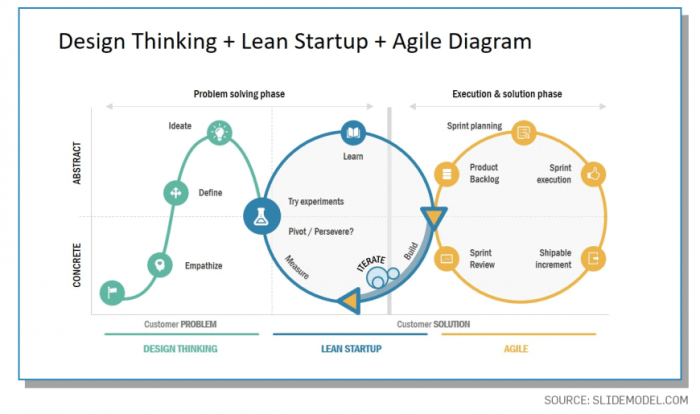
The Lean Startup methodology is a revolutionary approach to building and growing startups that emphasizes rapid experimentation, customer feedback, and iterative product releases. Its significance in the modern business landscape cannot be overstated, as it provides a framework for reducing waste and increasing the chances of success in new ventures. Lean Startup encourages entrepreneurs to test their ideas quickly and make data-driven decisions rather than relying on traditional business planning methods.At the core of Lean Startup are three fundamental principles: Build-Measure-Learn, validated learning, and a focus on customer-centric development.
The iterative nature of this methodology allows startups to refine their products in response to actual user feedback, which is crucial for ensuring market fit and reducing the risks associated with launching new products. By adopting Lean Startup methodologies, businesses across various industries can benefit from improved efficiency, reduced costs, and a higher likelihood of achieving product-market fit.
Lean Startup and Business Accounting
Lean Startup principles can significantly optimize accounting processes within startups by streamlining financial operations and enhancing decision-making capabilities. Integrating financial metrics into Lean Startup practices involves using key performance indicators (KPIs) to track progress and make informed adjustments based on real-time data. Startups often face unique accounting challenges, such as limited resources and the need for agility, making the Lean approach particularly relevant.
- Implementing cloud-based accounting software allows for real-time financial reporting and collaboration.
- Utilizing automated invoicing and expense tracking can save time and reduce errors.
- Establishing a clear budget and financial projections ensures that resources are allocated effectively.
Lean Startup and Accounting Payroll
Streamlining payroll processes is essential for Lean Startups, as payroll can often become a cumbersome task that consumes valuable time and resources. By adopting Lean principles, startups can simplify their payroll systems, ensuring employees are compensated accurately and on time. Payroll software that aligns with Lean principles focuses on efficiency, automation, and compliance.For instance, software solutions like Gusto and QuickBooks Payroll offer features designed to minimize manual data entry and provide seamless integration with existing accounting systems.
Accurate payroll management is crucial for maintaining employee satisfaction and trust, especially in a startup environment where every team member is vital to success.
Lean Startup and Business Advertising
Effective advertising strategies are crucial for Lean Startups looking to establish their brand in competitive markets. Lean methodology encourages startups to leverage customer feedback to shape advertising campaigns, ensuring that marketing efforts resonate with the target audience.To measure advertising effectiveness within a Lean framework, startups can:
- Utilize A/B testing to compare different advertisements and identify which performs best.
- Analyze customer engagement metrics across various platforms to determine the most effective channels.
- Solicit feedback from customers regarding their perceptions of advertising campaigns to refine messaging.
Lean Startup and Business Agriculture
Innovative agricultural practices influenced by Lean methodologies are transforming the farming industry. By adopting Lean principles, agricultural startups can enhance productivity, reduce waste, and achieve sustainability. Case studies of successful Lean Startups in agriculture demonstrate the effectiveness of this approach.For example, vertical farming companies utilize Lean practices to optimize space and minimize resource consumption, while precision agriculture startups use data analytics to improve crop yields.
Sustainable practices, such as minimizing chemical use and enhancing soil health, align perfectly with Lean principles, which prioritize efficiency and value creation.
Lean Startup in Architecture and Interior Design
Lean Startup methodologies can significantly transform design processes in architecture and interior design. Iterative design is a key component of Lean Architecture, allowing designers to continuously improve projects based on feedback and performance metrics. This approach fosters creativity and innovation while minimizing waste and inefficiencies.Examples of projects utilizing Lean principles include collaborative design efforts where teams use integrated tools to create real-time 3D models, enabling rapid adjustments based on client feedback.
By embracing Lean practices, architectural firms can enhance client satisfaction and deliver projects that meet evolving needs.
Lean Startup and Business Branding
Brand identity is crucial for Lean Startups, as it helps differentiate them in crowded markets. Building a strong brand through customer engagement is a powerful strategy within the Lean framework. By continuously interacting with customers and gathering insights, startups can refine their branding efforts to better align with customer expectations.To test brand concepts effectively in a Lean context, startups can employ a framework that includes:
- Conducting market research to understand customer preferences and perceptions.
- Utilizing social media to create buzz and gather feedback on branding elements.
- Implementing focus groups to gain direct insights into brand messaging and visuals.
Lean Startup and Business Travel
Lean Startups can optimize travel expenses through careful planning and strategic decision-making. Flexibility and adaptability are essential components of travel management, allowing startups to respond to changing circumstances and new opportunities.Technological tools, such as travel management software and expense tracking applications, play a vital role in Lean travel management. These tools enable startups to monitor travel expenses in real time, ensuring that budgets are adhered to and adjustments can be made on the fly.
Lean Startup and Career Advice
Entrepreneurs can apply Lean principles to career development by embracing a mindset of continuous learning and adaptability. Networking and building relationships are crucial for growth, and Lean Startups can leverage their connections to gain insights and support.Strategies for career advancement in a Lean context include:
- Attending industry events and meetups to expand professional networks.
- Engaging in mentorship programs to learn from experienced entrepreneurs.
- Participating in workshops and training sessions to develop new skills and knowledge.
Lean Startup and Change Management
Change management is a vital aspect of Lean Startups, as they often operate in rapidly changing environments. Implementing change effectively requires clear communication, stakeholder engagement, and a structured approach to transition.Lean methodologies can ease transitions during change processes by providing a framework for identifying areas of improvement and making data-driven decisions. Guidelines for implementing change include:
- Defining clear objectives and outcomes for the change initiative.
- Involving team members in the change process to foster buy-in and reduce resistance.
- Monitoring progress and adjusting strategies based on feedback and performance metrics.
Lean Startup in the Construction Industry
The applications of Lean principles in construction project management have led to improved efficiency and reduced costs. By minimizing waste and streamlining processes, construction firms can deliver projects on time and within budget.Successful Lean-driven construction projects often showcase the impact of collaborative planning and continuous improvement. For instance, implementing just-in-time delivery systems ensures that materials arrive exactly when needed, reducing storage costs and enhancing workflow.
Lean Startup and Business Consulting
Lean Startup concepts can enhance consulting practices by promoting a focus on value delivery and client engagement. By using Lean methods, consultants can drive better outcomes for clients while maintaining efficiency in their own operations.Case studies of consulting firms that have adopted Lean strategies demonstrate significant improvements in client satisfaction and project success rates. Consultants can implement Lean practices by:
- Utilizing iterative feedback loops to refine solutions based on client needs.
- Encouraging collaboration between teams and clients to foster innovation.
- Tracking key metrics to measure the effectiveness of consulting interventions.
Lean Startup and Continuity Disaster Recovery
Disaster recovery planning is essential for Lean Startups, as unexpected disruptions can significantly impact operations. Developing continuity plans within a Lean context involves identifying critical processes and creating strategies to maintain operations during crises.Best practices for maintaining operations during disruptions include:
- Establishing clear communication channels to inform stakeholders during emergencies.
- Conducting regular risk assessments to identify potential vulnerabilities.
- Implementing backup systems and protocols to ensure data integrity and availability.
Lean Startup and Customer Service
Improving customer service using Lean principles is vital for startups aiming to build long-term relationships. Gathering and analyzing customer feedback is essential for identifying areas where service can be enhanced.Strategies for enhancing customer service in Lean Startups include:
- Implementing customer relationship management (CRM) systems to track interactions and preferences.
- Training staff on Lean principles to empower them to make customer-focused decisions.
- Soliciting regular feedback through surveys and direct engagement to continuously improve service quality.
Lean Startup and Entrepreneurialism
The relationship between Lean methodology and entrepreneurial success is profound. Key entrepreneurial traits such as resilience, adaptability, and a willingness to learn align closely with Lean principles, creating a strong foundation for thriving startups.Inspirational stories of entrepreneurs who effectively applied Lean methods highlight the transformative potential of this approach. These entrepreneurs demonstrate how quick iterations, customer feedback, and data-driven decision-making can lead to remarkable business achievements.
Lean Startup and Business Ethics
Ethical considerations are integral to Lean Startups, as transparency and accountability play critical roles in building trust with customers and stakeholders. Startups must navigate ethical dilemmas while adhering to Lean principles that prioritize value creation.Examples of ethical dilemmas faced by Lean Startups include balancing profit motives with social responsibility and ensuring fair treatment of employees. Potential solutions involve establishing clear ethical guidelines and fostering a culture of integrity within the organization.
Lean Startup and Business Franchising
The application of Lean principles in franchise development can enhance operational efficiency and brand consistency. Startups must focus on maintaining a cohesive brand identity across franchises while remaining responsive to local market needs.Feedback plays a crucial role in enhancing franchise operations, ensuring that individual locations can adapt while adhering to the overarching brand strategy. Strategies for successful franchise development include:
- Implementing standardized training programs to ensure consistency in service and operations.
- Encouraging franchisees to share insights and best practices to foster collaboration.
- Utilizing performance metrics to identify areas for improvement and support franchise growth.
Lean Startup and Furnishings and Supplies
Optimizing supply chain management for startups through Lean methodologies can significantly enhance operational efficiency. Startups must prioritize building strong supplier relationships to ensure timely delivery and quality materials.Examples of startups that successfully implemented Lean practices in procurement include those using just-in-time inventory systems to minimize excess stock. By focusing on value-added activities and reducing waste, startups can create a more effective supply chain.
Lean Startup and Human Resources
Human resources play a vital role in fostering a Lean organizational culture. Startups must focus on recruiting and retaining talent aligned with Lean principles to drive innovation and efficiency.Strategies for effective HR practices in Lean Startups include:
- Developing a clear company culture that emphasizes continuous improvement and teamwork.
- Implementing performance reviews that focus on both individual contributions and team success.
- Offering professional development opportunities to enhance employee skills and engagement.
Lean Startup and Industrial Mechanical
Innovations in the industrial mechanical field driven by Lean methodologies are enhancing efficiency and productivity. Lean practices help companies streamline their operations, reduce costs, and improve overall performance.Case studies illustrating successful Lean implementations in mechanical sectors include manufacturers utilizing value stream mapping to identify bottlenecks and optimize processes. By embracing Lean principles, these companies achieve greater operational excellence and competitiveness in their industries.
Conclusive Thoughts
In summary, the Lean startup methodology represents a strategic shift in how businesses operate, with its focus on experimentation and customer feedback proving essential for long-term success. By adopting these principles, startups can not only enhance their operational efficiency but also build stronger connections with their customers, ultimately paving the way for innovation and growth in an ever-evolving market.
Detailed FAQs
What is the Lean startup methodology?
The Lean startup methodology is an approach to developing businesses and products that emphasizes rapid prototyping, validated learning, and iterative product releases to shorten development cycles and discover what customers really want.
How can Lean startup methodology benefit established companies?
Established companies can benefit from Lean startup methodology by fostering a culture of innovation, improving responsiveness to market changes, and enhancing their ability to experiment with new ideas without significant resource commitment.
Can the Lean startup methodology be applied in non-tech industries?
Yes, Lean startup methodology can be applied in various sectors, including agriculture, healthcare, and manufacturing, as its principles of efficiency and customer focus are universally relevant.
What role does customer feedback play in Lean startups?
Customer feedback is crucial in Lean startups as it informs product iterations, helping entrepreneurs to validate assumptions, refine offerings, and ultimately align more closely with customer needs.
How do Lean startups measure success?
Lean startups measure success through key performance indicators (KPIs) that assess customer engagement, satisfaction, and financial metrics, as well as through feedback loops that guide product development.


